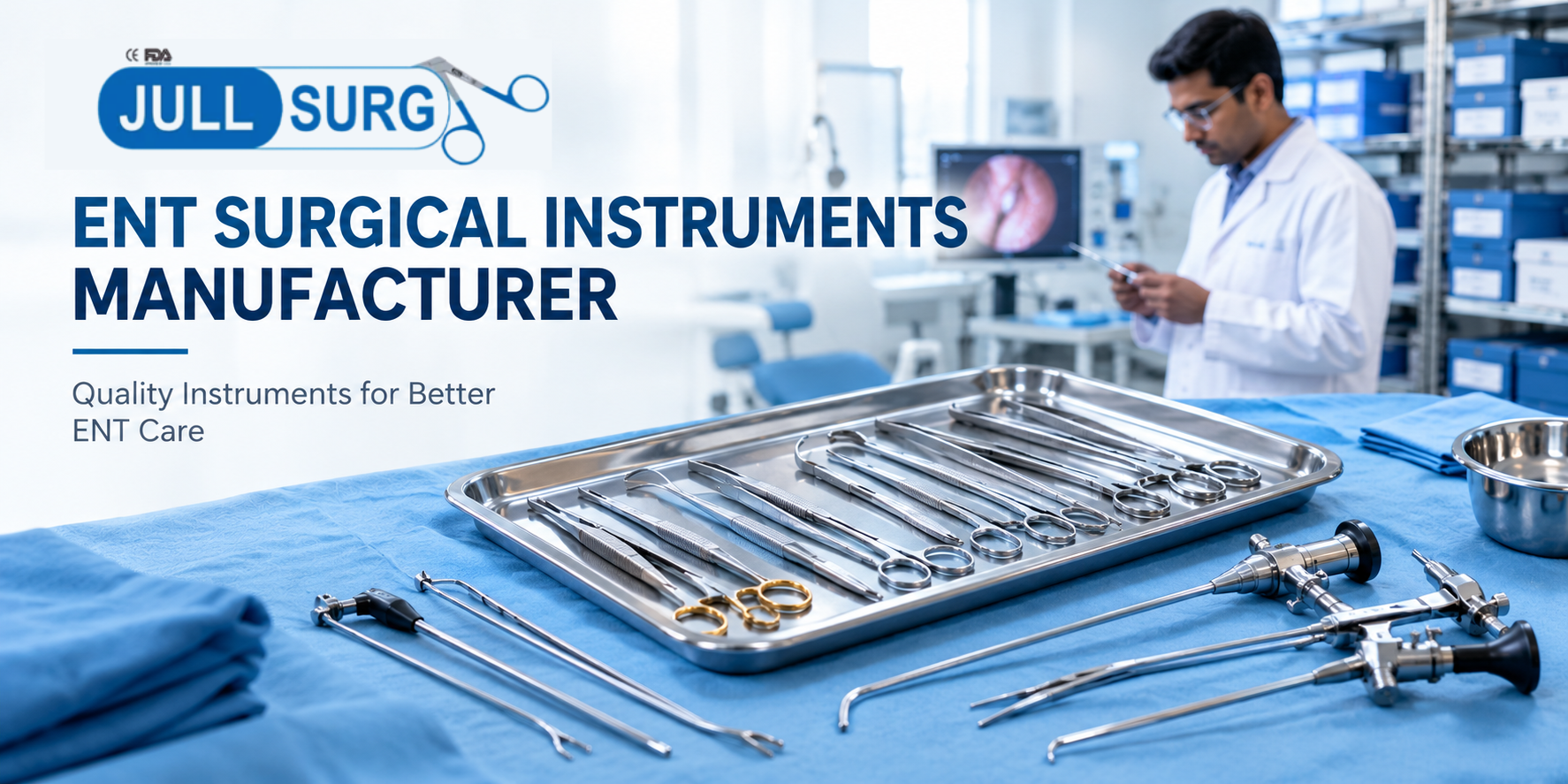
ENT Surgical Instruments Manufacturer
ENT procedures involve delicate areas of the ear, nose, throat, and related structures. For hospitals and ENT clinics, selecting the right instruments is an important part of maintaining an efficient surgical setup. Different procedures require instruments with suitable designs, sizes, working lengths, and configurations.
A reliable ENT Surgical Instruments Manufacturer can help healthcare buyers source instruments for different otology, rhinology, sinus, microsurgical, and endoscopic requirements. JullSurg manufactures and supplies a range of ENT surgical instruments for hospitals, clinics, surgeons, medical distributors, and healthcare organizations.
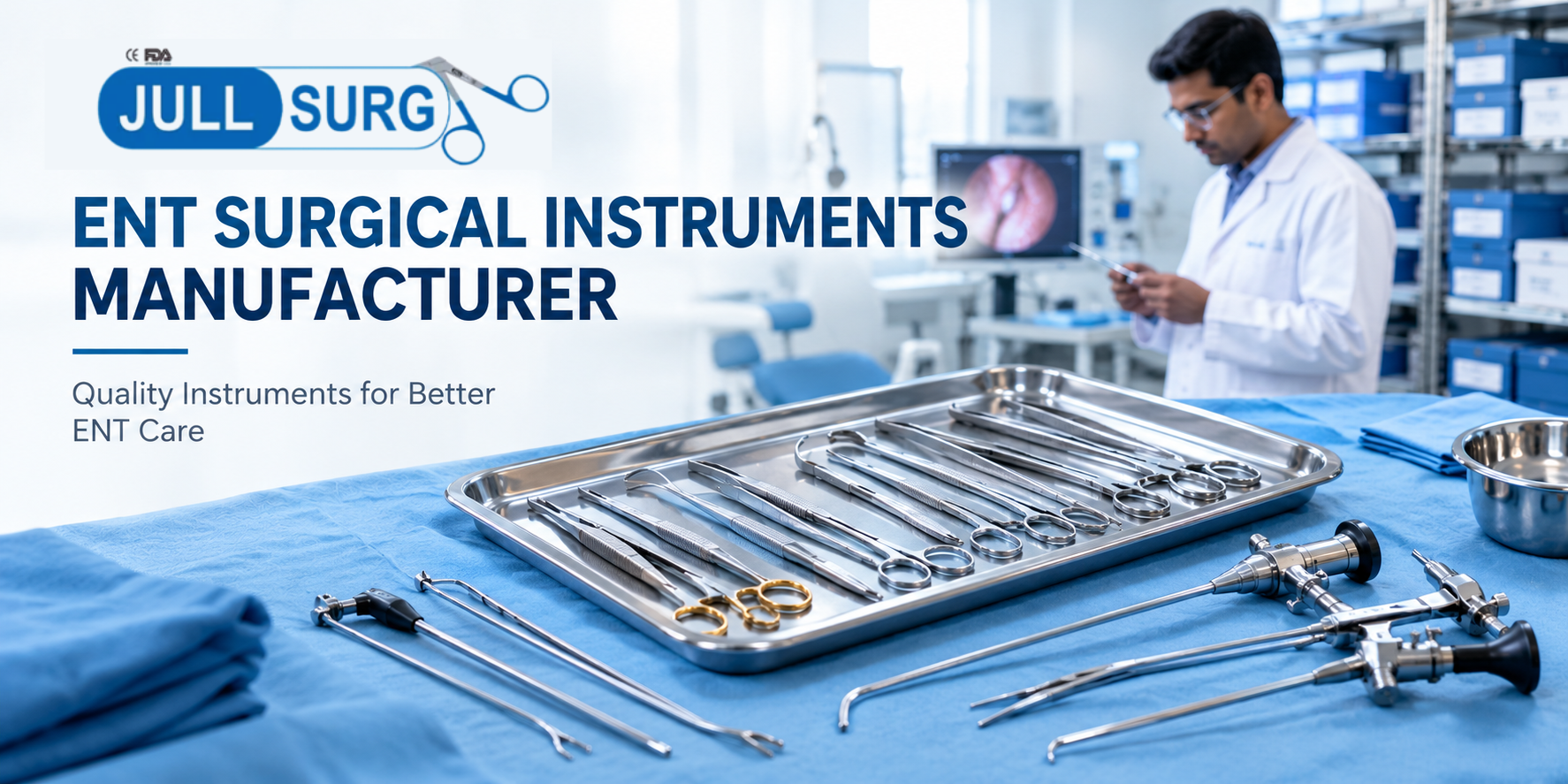
What Should You Look for in an ENT Surgical Instruments Manufacturer?
Choosing an ENT instrument supplier should involve more than comparing prices. Buyers should look at the manufacturer's production capabilities, product range, material options, inspection procedures, documentation, and ability to maintain consistent supply.
An experienced Ent Instruments Manufacturer should provide clear product information so buyers can select instruments according to their intended application. Factors such as instrument dimensions, tip configuration, working length, angulation, material, and finish can be important during procurement.
Buyers should also confirm product specifications and availability before placing an order.
Choose Instruments Based on the ENT Procedure
ENT covers several areas of practice, so instrument requirements can differ considerably. A hospital may need separate instruments for ear procedures, nasal and sinus work, rhinoplasty, microsurgery, and endoscopic applications.
Before purchasing, procurement teams should identify:
- The surgical specialty or department
- Intended instrument application
- Required size and working length
- Straight, curved, or angled configuration
- Material and finish requirements
- Quantity required
- Cleaning and sterilization requirements
This approach helps buyers order instruments that match their actual requirements instead of purchasing products based only on a catalogue image.
Otolaryngology Instruments for Different Surgical Needs
Buy Otolaryngology Instruments
Healthcare buyers looking to Buy Otolaryngology Instruments should first understand the specific instruments required by their ENT department. Otology products can include aural speculums, forceps, micro instruments, hooks, curettes, knives, needles, elevators, and suction instruments.
JullSurg's published ENT range includes otology instruments, microsurgical instruments, nasal instruments, sinus instruments, suction products, and endoscopic ENT instruments.
Buy Sinus Instruments
Businesses and hospitals planning to Buy Sinus Instruments should compare products according to their intended use, size, configuration, and working requirements. Sinus instrument categories may include sinus seekers, antrum curettes, cannulas, suction irrigation tubes, punches, knives, trocars, and related instruments.
The appropriate product should be selected according to the requirements of the healthcare facility and confirmed with the supplier before purchase.
Ear Endoscopic Instruments
Ear Endoscopic Instruments are designed for specific endoscopic ENT applications and may differ in shape, working length, and tip configuration.
During procurement, buyers should review:
- Instrument design
- Working dimensions
- Material
- Tip configuration
- Handling requirements
- Cleaning and sterilization instructions
- Product documentation
JullSurg's catalogue includes endoscopic ear hooks, dissectors, curettes, double-ended dissectors, and other specialized ENT instruments.
Rhinoplasty Instruments
Rhinoplasty Instruments should be selected according to the requirements of the procedure and the preferences of qualified ENT or surgical professionals. Product selection may involve different retractors, elevators, forceps, nasal speculums, saws, rasps, osteotomes, chisels, and other nasal instruments.
For procurement teams, useful points to compare include instrument design, dimensions, material, finishing, and quality inspection. JullSurg's published catalogue includes several nasal and rhinology instrument categories.
Skull Base Instruments and Specialized ENT Requirements
Skull base instruments require careful selection because these products are intended for specialized surgical applications. Buyers should avoid selecting instruments solely from a general product list.
Before purchasing, confirm:
- Intended application
- Instrument dimensions
- Working length
- Tip design
- Angulation
- Material
- Product documentation
The final selection should be based on the requirements of the surgical team and healthcare facility.
Temporal Bone Workstation and ENT Treatment Unit
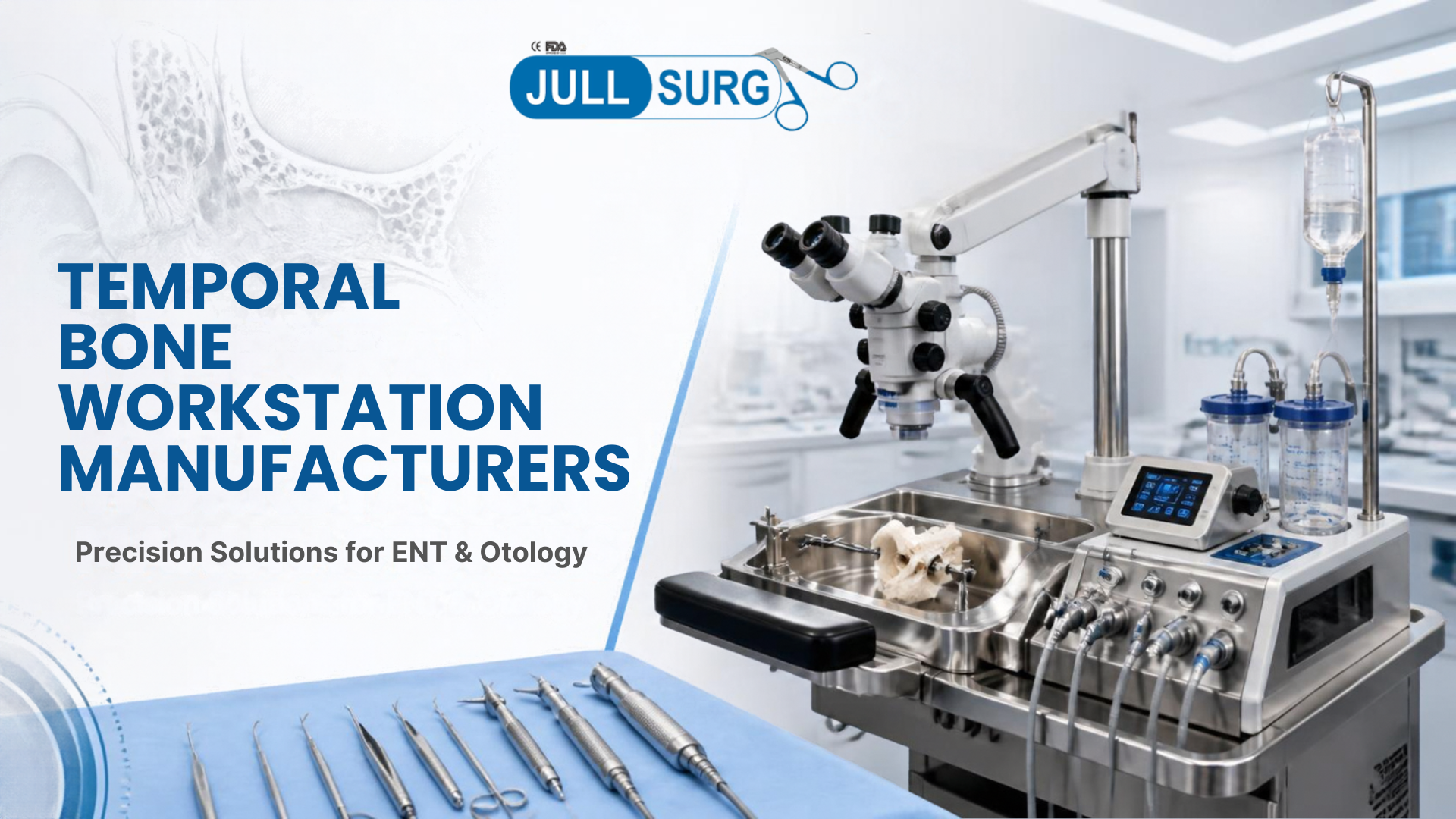
ENT departments and training facilities may also require specialized equipment alongside surgical instruments. A Temporal bone workstation can be considered for facilities involved in ENT training and related educational requirements, while an ENT treatment unit may form part of an ENT clinical setup.
Before purchasing such equipment, buyers should evaluate intended use, available features, space requirements, maintenance needs, compatibility, and supplier support. Specifications should always be confirmed directly with the manufacturer or supplier.
Why Choose JullSurg for ENT Surgical Instruments?
JullSurg manufactures and supplies ENT surgical instruments covering areas such as otology, rhinology, sinus surgery, microsurgery, suction, and endoscopic ENT applications. Its published catalogue includes instruments in different designs, sizes, working lengths, configurations, and selected material or finish options.
For hospitals, ENT clinics, distributors, and healthcare buyers, JullSurg can be evaluated based on product requirements, available categories, specifications, supply needs, and order support.
Things to Check Before Buying ENT Surgical Instruments
Before placing an order, procurement teams can use this checklist:
- What procedure is the instrument intended for?
- What material is used?
- What are the dimensions and working length?
- Is the required configuration available?
- How is the product inspected?
- What documentation is provided?
- What are the cleaning and sterilization requirements?
- Is the product currently available?
- What is the expected delivery timeline?
- What support is available after purchase?
Clear answers to these questions can make the purchasing process more organized and reduce the possibility of ordering unsuitable products.
How to Select the Right ENT Instrument Supplier?
A dependable ENT instruments manufacturer should be assessed through the complete purchasing process. Product quality is important, but buyers should also consider manufacturing experience, range, documentation, supply consistency, communication, delivery capability, and customer support.
Hospitals and distributors should compare suppliers using the same requirements so they can make a fair purchasing decision. Checking product specifications directly with the manufacturer is especially useful for specialized ENT instruments.
Conclusion
Selecting the right ENT surgical instruments manufacturer requires careful attention to product quality, material, design, dimensions, intended application, manufacturing capability, documentation, supply reliability, and support. Different ENT requirements may call for specific products, from Ear Endoscopic instruments and Rhinoplasty instruments to Skull base instruments, along with equipment such as a Temporal bone workstation or ENT treatment unit.
JullSurg offers a broad published range of ENT surgical instruments for professional healthcare requirements. Hospitals, ENT clinics, distributors, and healthcare buyers can explore the available range and contact JullSurg to discuss their product requirements and specifications.